
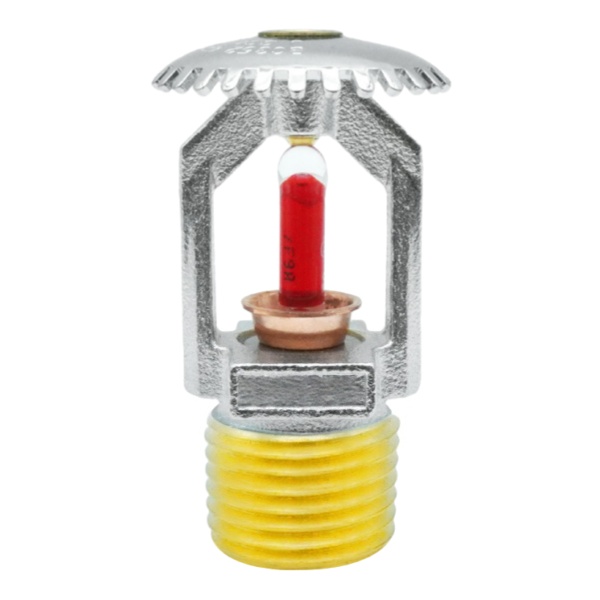
Fire sprinklers are key components of automatic sprinkler systems, used to sense temperature and automatically spray water to extinguish fires. Based on their working principles and structures, fire sprinklers are mainly classified into wet, dry, and pre-action types. Dry sprinklers are suitable for environments where the ambient temperature may be below 0℃. Their characteristic is that the space between the sprinkler head and the pipe is filled with compressed air or nitrogen to prevent the water in the pipe from freezing. When a fire occurs, the temperature-sensing element of the sprinkler head ruptures, releasing the gas, allowing water to flow into the pipe and be sprayed out through the sprinkler head to extinguish the fire.
The following factors should be considered when selecting fire sprinklers:
Temperature rating: Common temperature ratings include 68℃ and 93℃. The appropriate rating should be selected based on the ambient temperature.
Installation method: Available in upright, pendant, and sidewall types, the selection should be based on the installation location.
Flow coefficient: Indicates the flow characteristics of the sprinkler head. Common coefficients include K=80 and K=115.
Coverage area: The protection area of a single sprinkler head is generally 9-21 square meters.
When installing fire sprinklers, please note the following:
Sprinkler spacing is typically 1.8-3.7 meters, depending on the sprinkler type and hazard level.
The distance between the sprinkler and the wall should not exceed half the installation spacing.
Use a dedicated wrench during installation to avoid damaging the temperature sensing element.
Regularly inspect the sprinklers for paint coverage or mechanical damage.